Automating Mixed Slit Coil Packing Lines | FHOPE
Service-center automation fails when it's designed around the exceptional order. This guide shows how to group mixed coil orders into families, find the real constraint worth automating first, and make packaging rules usable at the point of work.
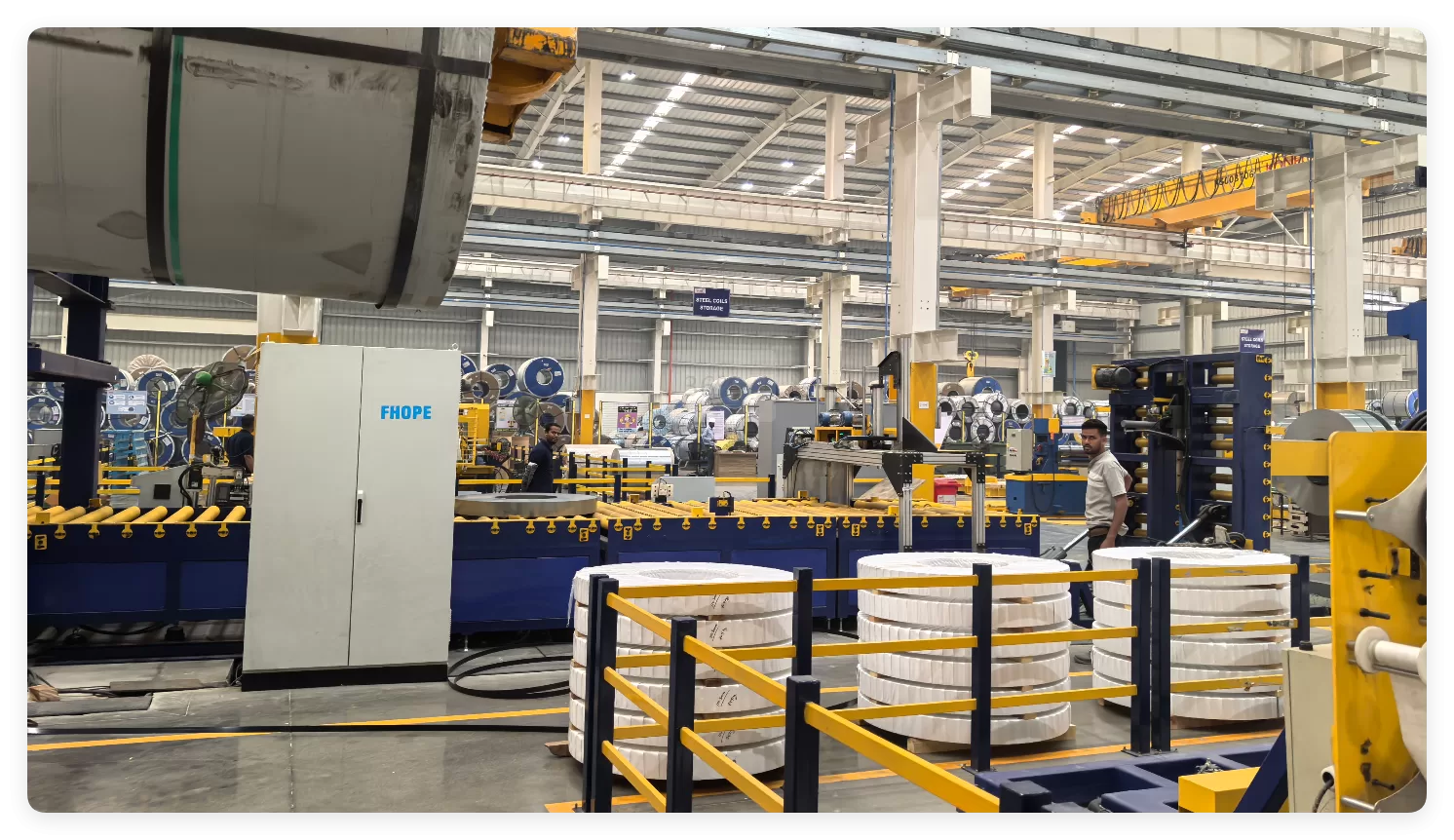
How to Automate a Service Center With Mixed Coil Orders
How to Automate a Service Center With Mixed Coil Orders
A steel service center rarely packs the same coil twice in a row. One slitting run can produce narrow and wide coils from the same mother coil, and the next order can be a different material with its own packing rule. We have designed slit-coil packing lines for customers who process GI, CR, PPGI, EGI and copper together, each with different slit widths and coil weights. Below we describe how we design an automatic coil packing line that copes with this mix.
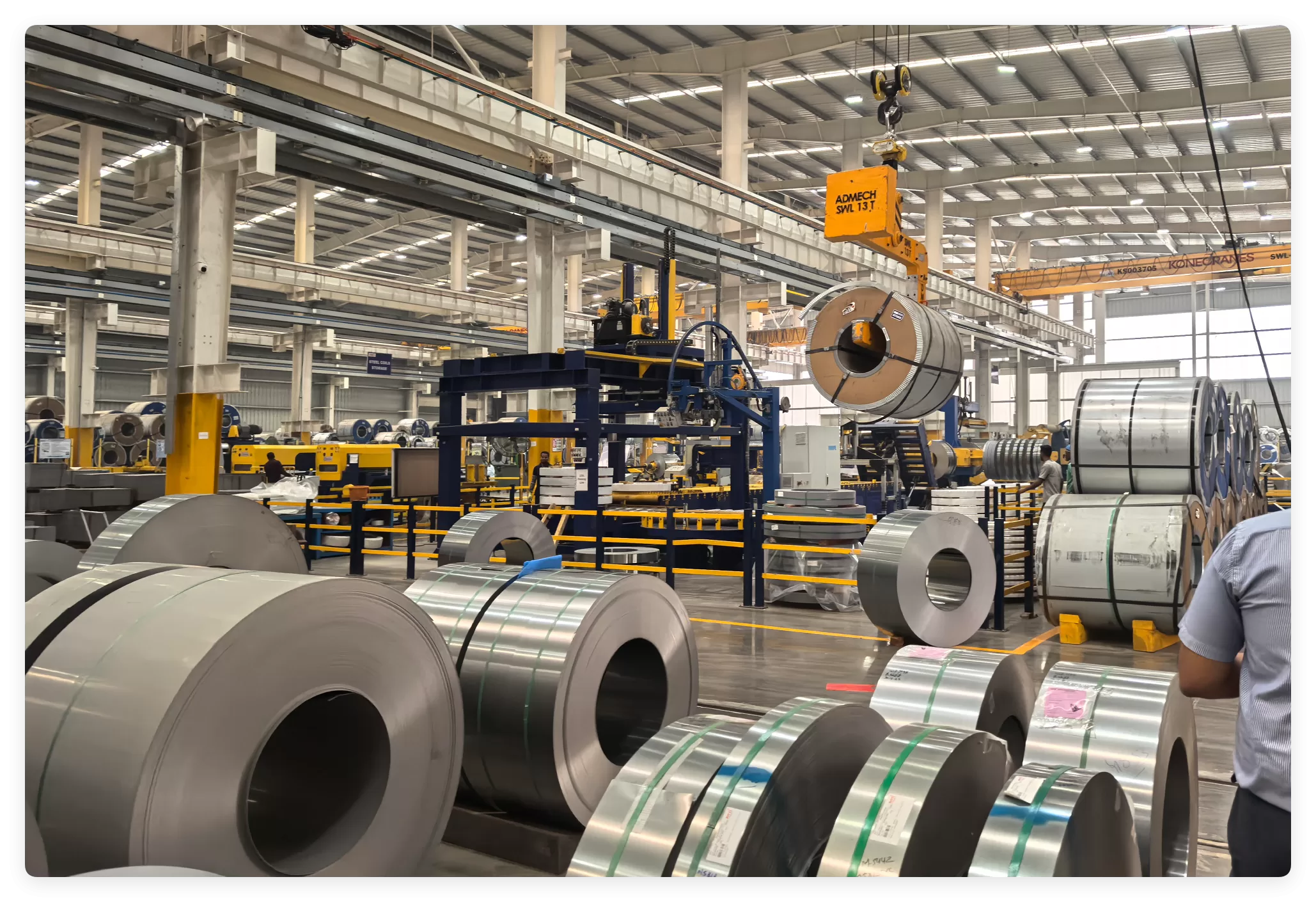
The image shows a steel service center coil packaging automation context. We design the line around the real order mix of materials, widths and coil weights.
Line Control: MES, ERP and Automated Recipe Selection
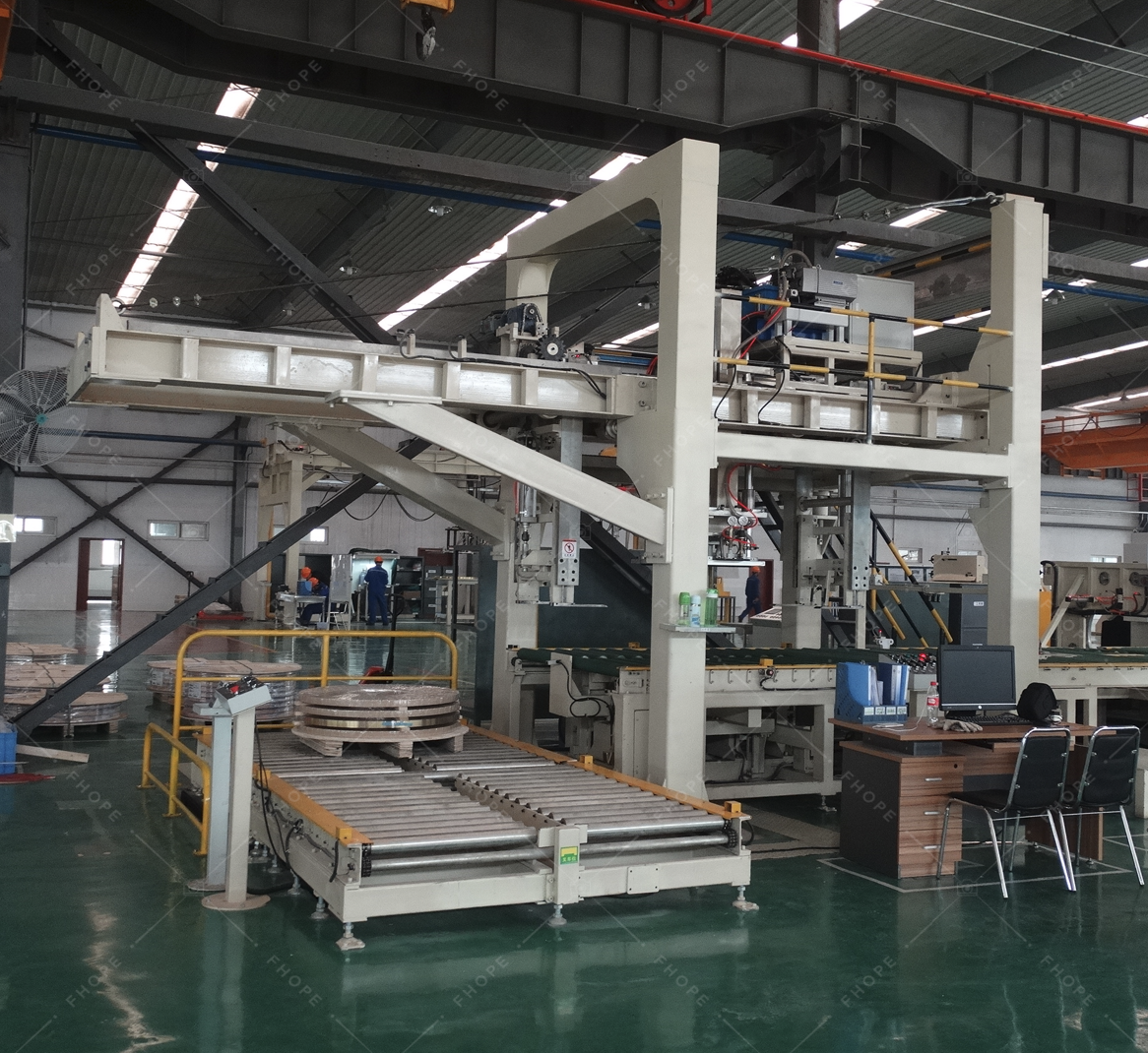
On our automatic slitting-coil packing line with a turntable stacker, an industrial PC controls the whole line. It receives coil parameters from the slitting line or from a barcode reader. The down-ender picks coils using information entered manually or sent over Profinet, and the packing data are shared with the plant's production systems (MES/ERP).
Because coil parameters arrive automatically from the slitting line, over Profinet or by barcode scan, the line can run mixed coils without anyone re-entering the order details. When a different packing rule is needed, the operator simply selects the corresponding recipe on the touch screen.

The image shows a design review where normal path, abnormal path, machines, and support zones are considered in one view. Mixed-coil automation needs the same method: the normal recipe flow and the exception route are designed together.
One Line, a Wide Coil Range
| Station | Range on our turntable-stacker line |
|---|---|
| Coil range | 80–5000 kg, OD 750–1400 mm, ID 508 mm, width 17–400 mm (the down-ender itself handles coils from 15 mm) |
| Turnstile (cross arm) | 10 t per arm, 40 t total, about 2 rev/min, 1500 mm arms, rotates according to the programmed picking sequence |
| Down-ender | Minimum width 15 mm, 20–30 s per coil |
| PET through-eye strapping | Strapping angle adjusted automatically; 3, 4 or 6 straps; PET 0.8 × 16 mm; about 15 s per cycle |
| Woven-belt wrapping | PP woven sheet; roll OD 100–450 mm, width 90–100 mm |
| Labeling | ID printing labeler and OD printing labeler |
| Turntable stacker | Max 1000 mm high (incl. pallet), 6000 kg per pallet, max 4000 kg per coil; 6-station turntable. Coils of 4000–5000 kg are stacked with a fork-arm or electromagnetic stacker |
Handle the Exceptions in the Recipe
- Narrow coils (around 15 mm) are generally strapped manually. The coil is secured with tape, tilted 90°, and then strapped through the eye with PP or PET strap (2, 3, 4 or 6 straps).
- Wide coils beyond this line's 400 mm limit, such as 1000 mm wide coils, are handled on our wide-coil configurations and can be strapped automatically or manually.
- Coated or bright coils need protection for their contact surfaces. Our conveyor rollers are PU-covered, and coil car saddles are lined with nylon or rubber.
- Non-ferrous coils can be wrapped in stretch film for dust and moisture protection.
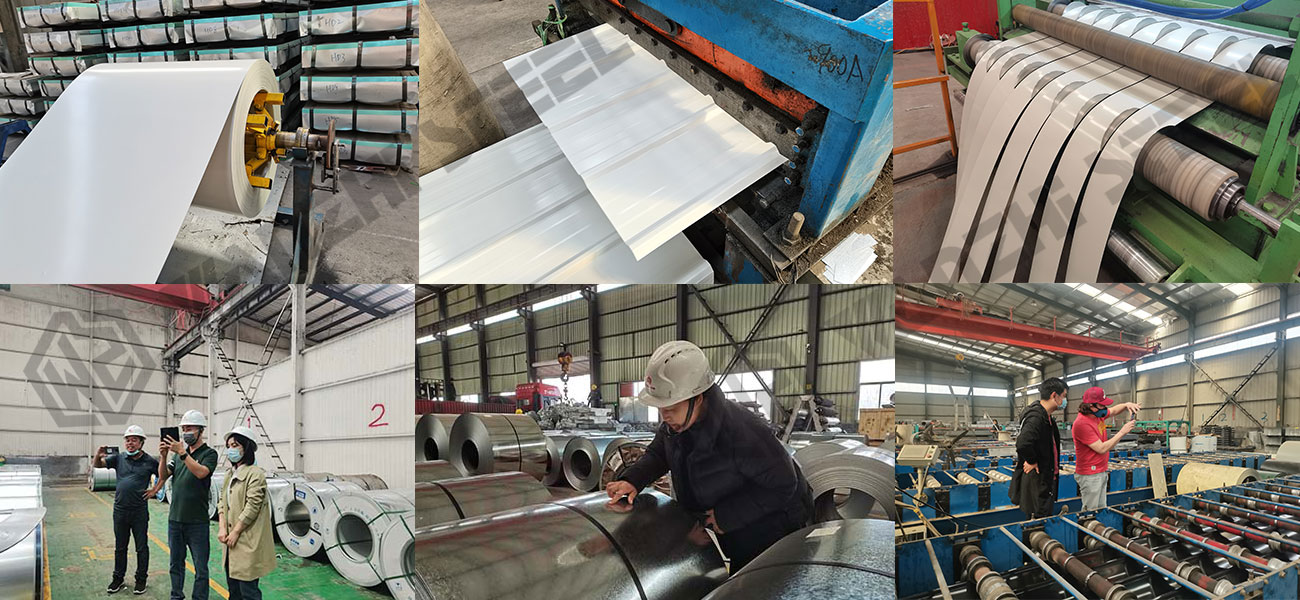
The image shows people preparing a coil so it can be protected. In a mixed service center, the approved surface protection and contact material stay visible in the recipe, not decided separately by each shift.
Automate in Stages
Not every center needs the full line on day one. A common order of investment:
- Down-ender at the turnstile, to remove manual lifting
- Through-eye strapping
- Wrapping, with an overlap of 20–90% to suit each order
- Weighing, labeling and stacking
For tighter budgets, our economic vertical slit-coil line uses a coil trolley, a nylon-lined feeding channel whose width adjusts to the coil, a vertical packing machine and a stacker-upender.
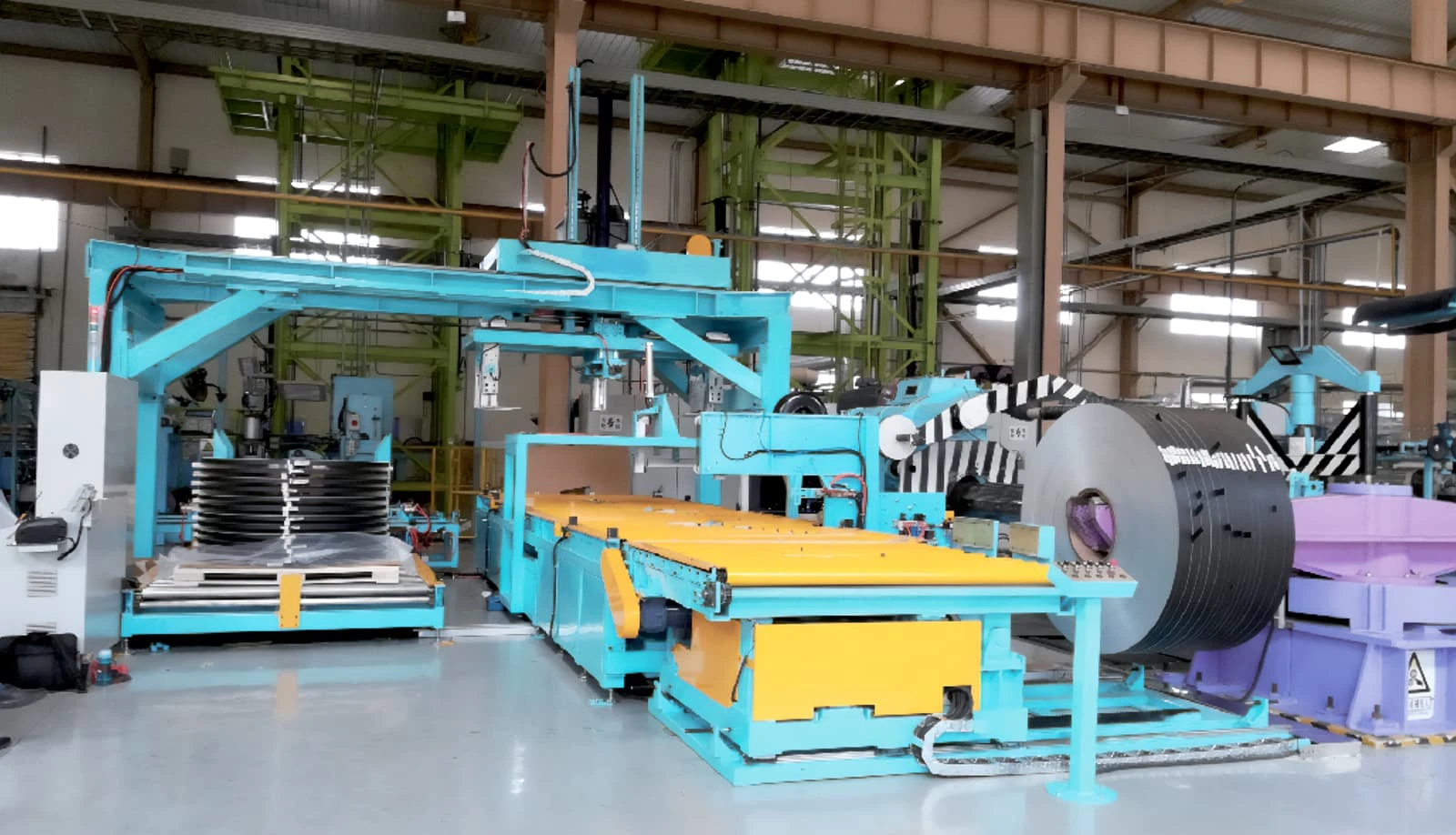
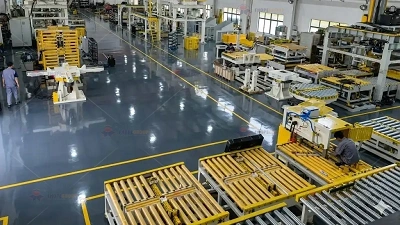
The image shows a steel coil packing factory context. A staged rollout keeps the first investment aligned with the measured constraint and leaves room to add transfer or integration after evidence.
Output and Warranty
Standard lines pack 10–30 coils per hour, and high-output configurations reach 50–60 coils per hour. The slowest station sets the rate. Every line carries our 2-year warranty.
Watch a slitting coil packing line in operation:

FAQ
Can one line pack different materials? Yes. We have built lines for mixed GI, CR, PPGI, EGI and copper coil orders.
How does the line know each coil's packing rule? It gets the coil data from the slitting line, a barcode reader or manual input, and shares the packing data with your MES/ERP.
What is the narrowest coil? 15 mm on the down-ender. Coils of around 15 mm are taped, tilted 90° and strapped manually.
How many coils per hour? 10–30 on standard lines, and 50–60 on high-output configurations.
What warranty applies? A 2-year warranty.
Send us your order mix (materials, widths, weights) for a line concept for your automatic coil packing line, or contact us.
Visual Details

Click to enlarge
Click to enlarge
Click to enlarge
Click to enlarge
Watch How It Works
Discover how our automated packaging solutions optimize your production line efficiency. This video demonstrates the seamless operation designed for maximum protection.
Trusted by Steel Mills & Industry Leaders
Global manufacturers rely on FHOPE heavy duty packaging equipment


Ready to optimize your packaging line?
Get a custom quote with ROI analysis. Our engineers respond within 24 hours.
- Free layout design
- Global installation support
- 2-year warranty included
Your information is secure and will never be shared.
Related Machines
Steel Coil Packaging line
View Details →
Vertical coil packaging line
View Details →
Hose Coil Packaging line
View Details →
Copper Coil Packaging line
View Details →
Wire Coil Packaging line
View Details →
Panel Packaging line
View Details →
Pipe Bagging Machine
View Details →
Aluminum profile packing line
View Details →
FHOPE Automatic pipe tube bundling&strapping line
View Details →
Automatic pipe tube bundling & strapping line
View Details →
Automatic steel tube strapping machine
View Details →
FHOPE Automatic steel tube packing machine
View Details →
Automatic plastic Pipe strapping packing line
View Details →
Automatic PPR/PVC Pipe bagging line
View Details →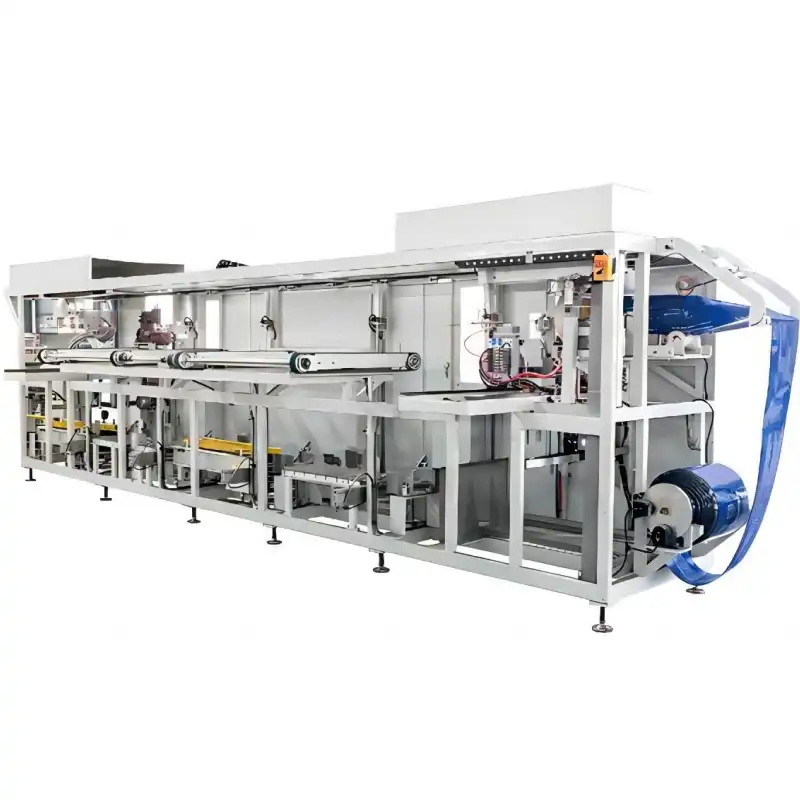
Platsic pipe bag packing machine
View Details →
Tyre Packing Machine FPT-200
View Details →
Tyre Packing Machine FPT-300
View Details →
Tyre Packing Machine FPT-400
View Details →
Cable Coil Packing Machine-FPCA100
View Details →